
What Is Climate Farm School?
People often ask:
Is it a retreat?
Is it a course?
Is it a professional training?
Is it a community?
The answer is: it’s all of those — and more.
Climate Farm School is an on-farm, evidence-based, farmer-led experience for people ready to participate in food systems transformation.
What We Mean by “Climate”
Since 2025, ‘climate’ has become a lightning rod, scrubbed from federal government and NGO websites alike. For us, the word ‘climate’ acknowledges the reality of human-caused climate change, and connects to the aspiration of building farms and food systems that are resilient in the face of changes to weather and precipitation patterns happening across the globe. The way we grow food has tremendous potential to create better local climatic conditions, from improved water and nutrient cycling to improved biodiversity, soil health, clean air, clean water, and restored ecosystem services. Using the word climate is our way of recognizing this hopeful potential, centering peer-reviewed science in our programming, and connecting to climate-positive future visioning and culture creation, starting at the farm level.
What We Mean by “Farm”
Continuing the theme here, ‘Farm’ is also a word that has come to mean very different things for different people. Someone growing up in the Midwest around vast swaths of monoculture corn/soy operations, or CAFOs, might come to abhor farms and want to get as far away from them as possible, while someone growing up in a coastal city might romanticize the idea of a (regenerative) farm as a place to reconnect with land and food, and dream of going back to the land and growing food in a homestead-y way rather than buying everything they eat from a chain supermarket. We appreciate the tension that this word holds in the world today, and in our work the word ‘farm’ encapsulates getting back to the roots and foundation of the food system, starting with the places where food is produced. We aspire to partner with farms across a spectrum of practices, from (transitioning) conventional to regenerative and agroecological, from urban to rural settings, to provide meaningful learning experiences and empower farmers as educators of their lived reality. Our current host farms are leaders and innovators, farming in a way that helps restore ecosystems, and the farms we visit during our programs represent a broader spectrum of what’s happening in the world of food production. We strive to illuminate and surface farming realities that have been obscured by modern ways of living (including urbanization), and facilitate open conversations with farmers without judgement and prejudice. Some farms in our network operate as non-profits, giving food away to allied food access and hunger relief projects and relying on fundraising to do so, and others operate as fully commercial enterprises, doing what they can to survive financially, first and foremost, and taking the best care for the environment that they feel is possible. Our programs promote understanding and bridging divides in the food system, centering our shared humanity and shared interests in building healthier, resilient regional food systems.
What We Mean by “School”
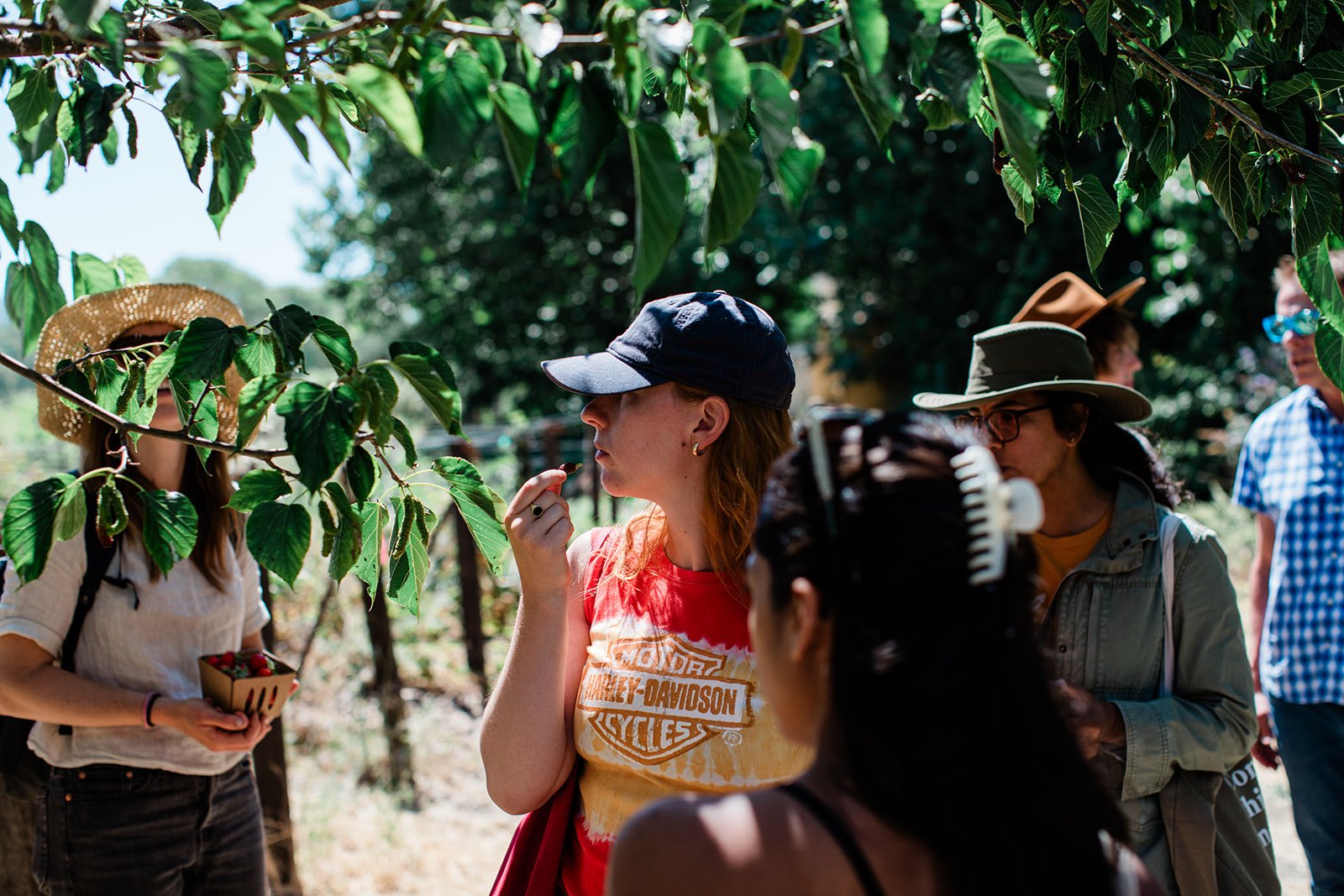
We use the word ‘school’ expansively and a bit ironically, valuing the process of unlearning as well as learning, and drawing some inspiration from the un-schooling movement, and schools without walls. CFS is all about experiential, hands-on, farm-based education; a retreat for all 5 senses; and the “school” or classroom is usually a field of veggies, a pasture, a barn, and a kitchen. Part of the inspiration and origin story of CFS was the quest of the founder to “learn things” that seemed to be really valuable, like growing food, that she never learned in formal school settings.
Our Programs
5-Day Courses
Immersive, on-farm learning experiences designed for individuals.
Includes an optional online component and deep hands-on engagement with host farmers.
Retreats
Custom-designed, shorter or longer immersive gatherings tailored for organizations and specific groups.
Workshops
1–2 day deep dives on focused topics, including alumni weekends and specialty intensives.
