
Know Your Grains
Why the most commoditized crop on earth is also the least traceable, and what re-regionalizing it could look like
By Megan Wang, Climate Farm School
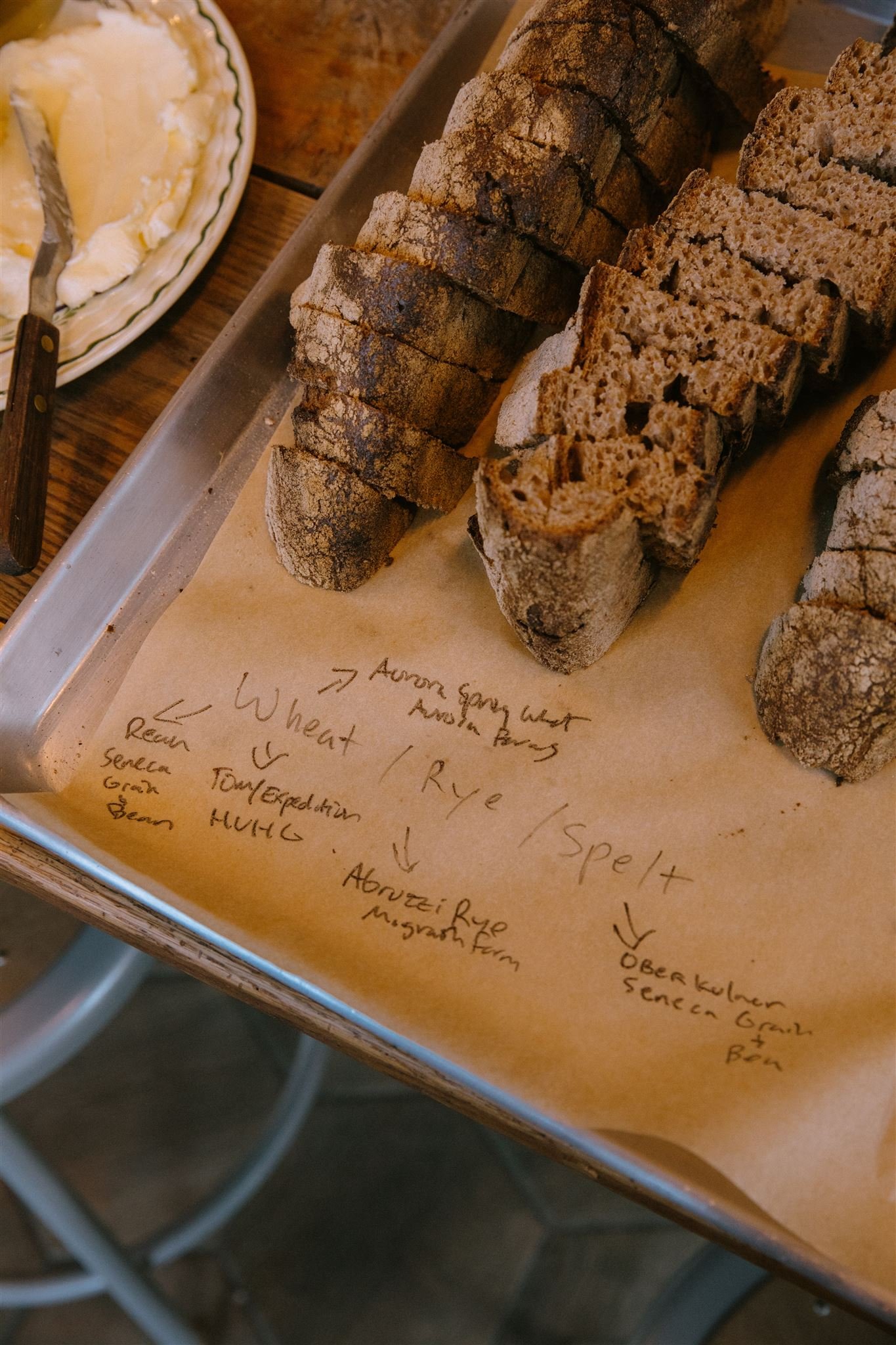
Breads baked with different heirloom grains at The Brooklyn Granary & Mill. Photo by Omer Kaplan Studio
Rice, wheat and maize together provide 50% of all calories globally, (World Economic Forum, 2018) with rice contributing 21% and wheat a close second at 20%. About one-third of global cereal grain production - particularly corn, barley, sorghum and oats - also goes into livestock feed, indirectly contributing to human nutrition. Grains are a massive share of our food system globally. Yet, when was the last time we asked how the flour in our grain-based products was milled, where did the grain come from and how was it grown? This information is something few people know, and most kernels of grain have never been touched by a human hand in the highly mechanized processes of growing, milling and distribution.
Consumers in the United States have taken an increasingly discerning view on our meat and dairy sources, with “two-thirds of U.S. consumers now [saying] they want detailed information about how their meat was raised and processed“. (The National Provisioner, 2026) We’ve started, albeit slowly, to shift towards purchasing local meat, dairy, fruits and vegetables from farmer’s markets, community-supported agriculture (CSA) boxes, and other direct-from-farm sources. We talk about single-origin, fair trade chocolate and coffee. Yet, where our grains are sourced from is often left out of the conversation.
It’s precisely because they are the most commoditized crops on earth that they receive the least attention in the provenance and supply chain transparency discourse. The near-total opacity of grain farm sourcing represents a massive blind spot in our own understanding of where our caloric intake comes from. For purely selfish reasons, we all should be demanding more transparency. For broader food systems to change, this is the biggest case for re-regionalizing our local food economies – while moving from conventional to organic and regenerative farming practices.
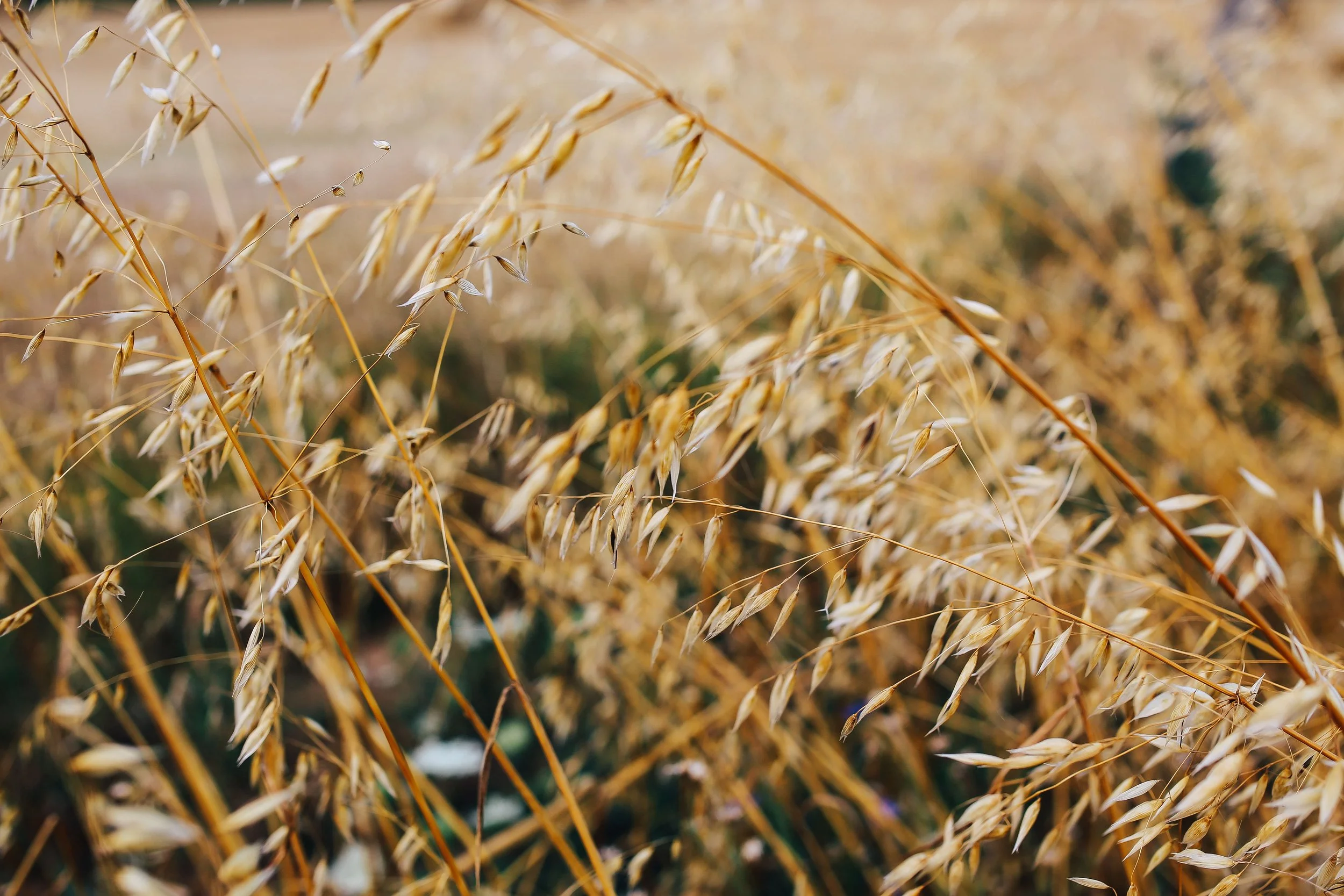
Oats ready for harvest
Where Does Our Grain Come From?
For U.S. consumers, it’s overwhelmingly domestic. The U.S. is a very large net exporter, especially of corn, wheat and soybeans.
Sources vary by crop:
Almost all corn consumed in the US is grown domestically.
For wheat, it’s about 90% domestic. The rest come from Canada. (USDA Economic Research - Wheat, 2026)
Surprisingly, rice is about 70% from domestic sources. But the important story here is that imports were only around 7% in the early 1990s, growing to 25% by 2022 and almost one-third today. This is primarily driven by increased demand for aromatic varieties that US farmers don’t produce at scale (USDA Economic Research, 2025)
About 98% of grains are grown conventionally. “The vast majority of U.S. grain acreage is grown conventionally. To put it in concrete terms, in 2024, U.S. farmers planted about 91.5 million acres of corn and 86.1 million acres of soybeans — and with organic grains in the low single-digit percentages at best, nearly all of that is conventional. 94% of all corn acres planted in the U.S. use biotech (GMO) varieties,.” CropWatch
Only 1% of total US acreage is certified organic. Only a small share of major field crops were grown under certified organic systems — corn at about 0.3%, soybeans at 0.2%, and wheat at 0.6%. USDA, 2011 (Numbers have grown modestly since.)
Regenerative agriculture has no standardized federal definition or certification. The Regenerative Organic Alliance (ROC) posits “with regenerative organic agriculture, we can rehabilitate soil, respect animal welfare, and improve the lives of farmers. We can sequester carbon, build healthier communities, and reap more nutritious and abundant yields”. Precedence Research estimates that only about 1.5% of U.S. farmland is cultivated specifically with regenerative practices (Trellis). However, we have no specific data to understand how much of this is grains.
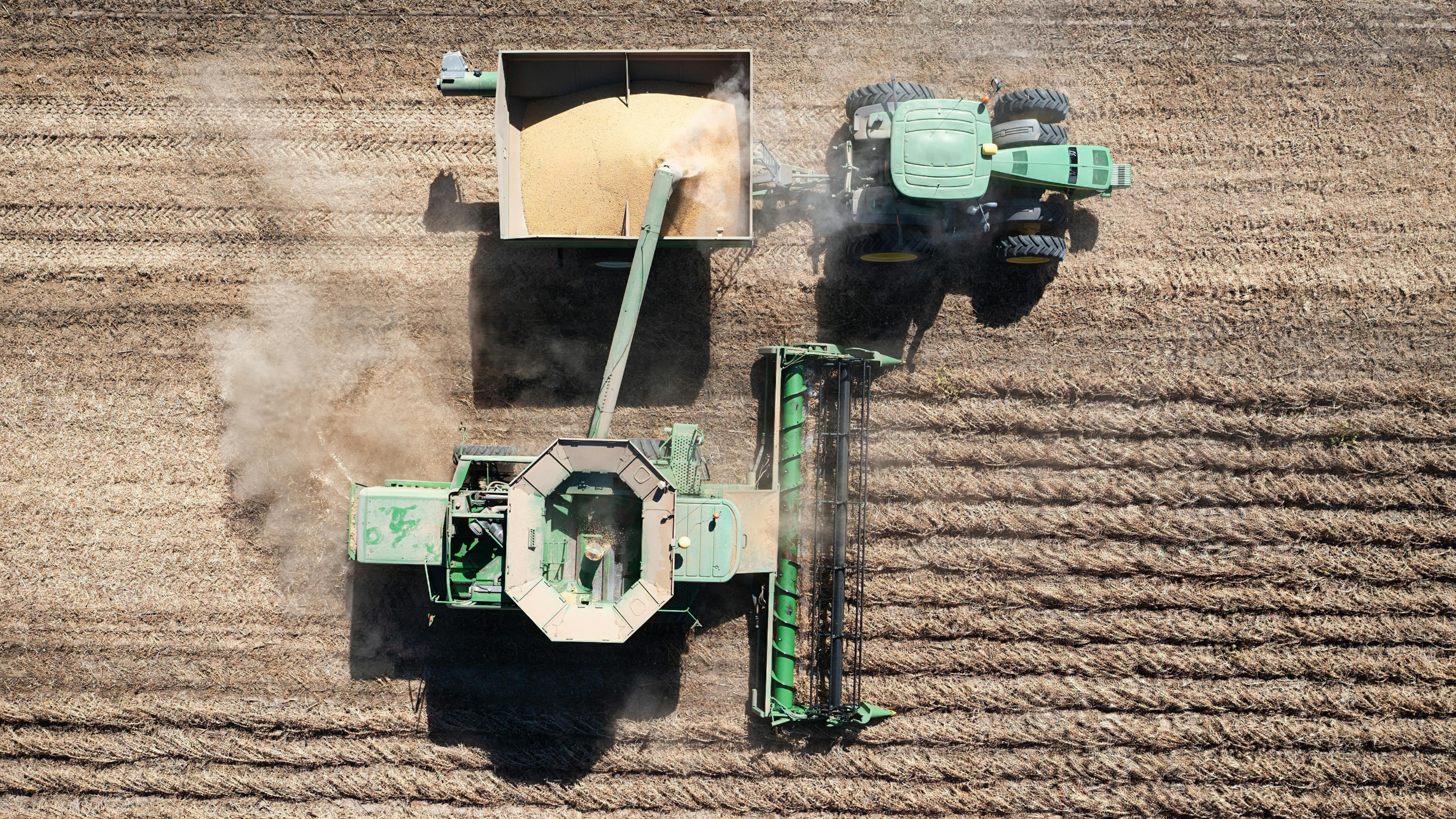
Conventional grain harvest
What’s on our Grocery Store Shelves Today?
That "food from nowhere" concept from McMichael (2009) still rings true – the idea that commodity grain is deliberately stripped of geographic and social identity as it moves through global markets. Conventionally grown grains are staples of our diet, baked into almost all of the loaves on grocery store shelves. There are some loaves that are now labeled as “organic”. However, the farming practices are still unknown - you might have large “industrial organic” producers growing monoculture crops with heavy tillage that cause more ecological issues than even conventional, as we learned in The Omnivore’s Dilemma.
But before we dive deeper, a quick anatomy lesson: a wheat kernel is essentially three things – the outer bran layers, the germ (embryo), and the endosperm (the starchy, protein-rich interior).
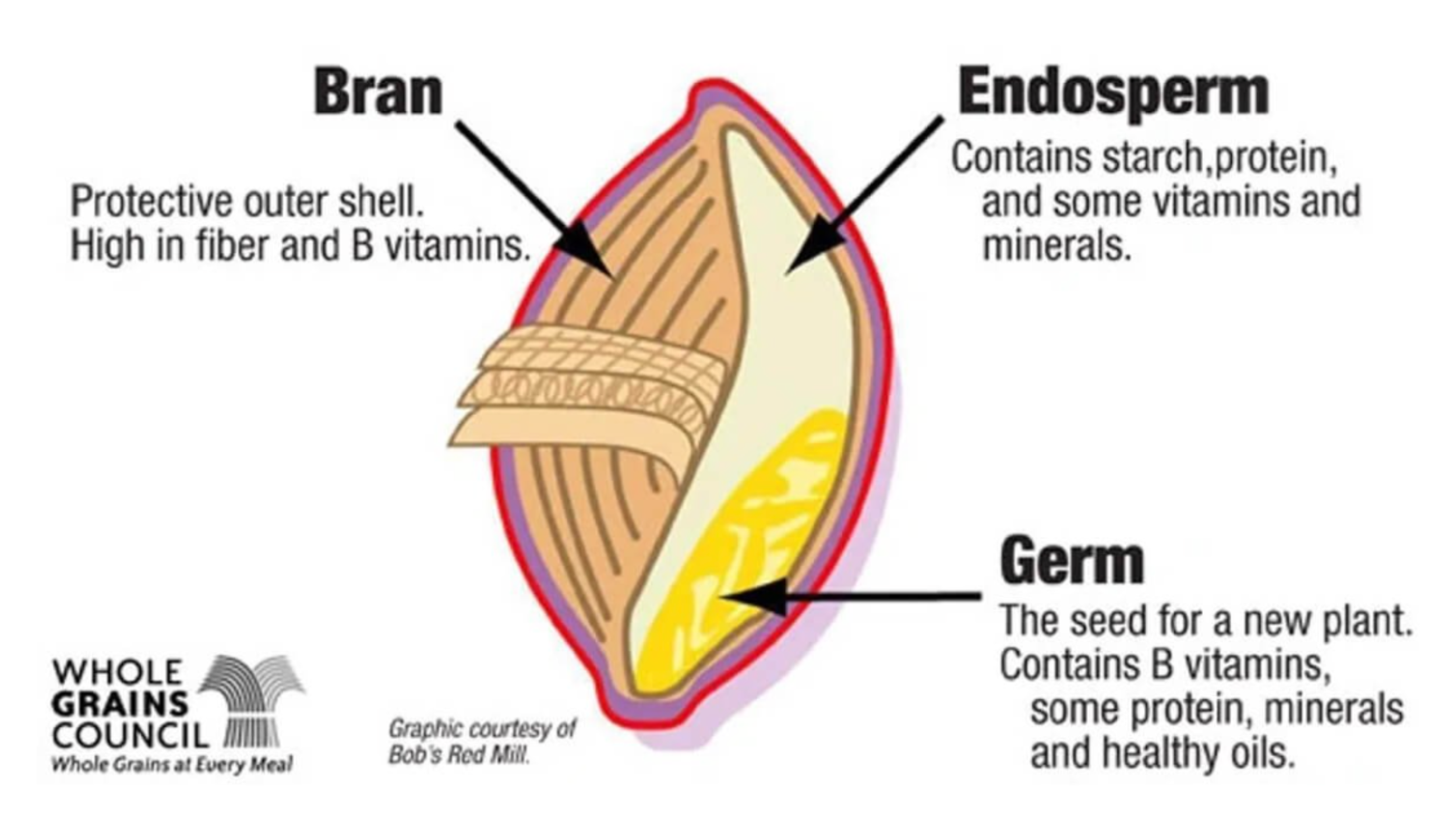
Anatomy of a grain
Some loaves are labeled as “Whole Wheat”, but are rebuilt aggregates of the fundamentals of a wheat berry. The term “100% Whole Wheat” under FDA labeling rules means the flour must contain all three parts of the kernel — bran, germ, and endosperm — in their natural proportions. However, the FDA doesn't regulate how that's achieved. Some commercial mills reassemble whole wheat flour by recombining streams after milling (rather than simply milling the whole berry straight through).
Walk with me down the bread aisle – Pepperidge Farm’s 100% Whole Wheat is a widely known bread brand that is always on a grocery store shelf. Moving down the aisle at a grocer like Whole Foods, you might see more organic options like their 365 by Whole Foods Market Organic 100% Whole Wheat. Further down that aisle, you might come across Dave’s Killer Bread 21 Whole Grains and Seeds which is known as one of the more nutritious options. But for all of these brands, while they are “Whole Wheat” by legal definition, these are not “true” whole wheat in the sense of single-pass stone milling. And with that, zero transparency of where the grains being milled are from, and how they are grown.
Why do we have a mechanically and capital intensive system of processing grains to only try to end up back to its simplest and natural form: fresh single-pass stone milled whole grain flour?
The Nutritional Consequence
The same efficiencies that made roller-milled white flour economically dominant also stripped out most of the nutrition. Bran contains fiber and B vitamins; germ contains vitamin E, healthy fats, and more B vitamins. What remained — the white endosperm — was largely starch and gluten protein. White flour was also, ironically, cheaper than whole grain flour for the first time in history, because the roller system was so efficient and the refined product stored so well.
By the early 20th century, public health researchers were linking the widespread adoption of white flour to epidemic levels of beriberi (B1 deficiency) and pellagra (B3 deficiency) in populations that had shifted heavily to refined grain diets. The U.S. response — mandatory enrichment of flour with iron and B vitamins, established in the 1940s — was an explicit acknowledgment that the industrial milling system had created a nutrition problem that required a regulatory fix.
A “Brief History” on the Stone Mill to Roller Mill Revolution
For millennia, grain was ground between two circular stones. Stone mills could be powered by water or wind, and by the 18th century, watermills in particular were quite sophisticated. However, stone milling has an inherent limitation: it's hard to fully separate the bran and germ from the starchy endosperm. The oils in the wheat germ would go rancid quickly, limiting shelf life; and the bran that remained gave the flour a tint of “grayish” color. Hence, the rise of white flour: it was prized but expensive — millers would "bolt" or sieve stone-ground flour through progressively finer silk screens to remove the bran and germ, but it was laborious and imperfect.
The broader industrial revolution created the preconditions for milling's transformation. Steam power freed mills from riverbanks and wind dependence, allowing them to locate in cities near their markets. All while urbanization drove demand for cheap, storable food at scale.
In the 1830s–1840s, millers began experimenting with iron rollers instead of stones. Rollers could be set with precision gaps, and a sequence of roller pairs — each progressively closer together — could crack the wheat kernel gently, separate the bran in large flakes (which sifted out easily), and then progressively reduce the endosperm to fine white flour. This "gradual reduction" process was further refined throughout the mid-19th century, particularly in Budapest, which became the flour milling capital of Europe by the 1860s.
In 1874, Cadwallader Washburn (of what would become General Mills) hired engineers who had studied the Budapest system and installed the first fully operational roller mill in Minneapolis. It produced dramatically whiter flour, better yields, and the ability to unlock the hard red spring wheat of the upper Midwest that had previously been difficult to mill. Minneapolis became the flour capital of the world by the 1880s, and the brands that emerged from that moment — Gold Medal, Pillsbury — still exist today.
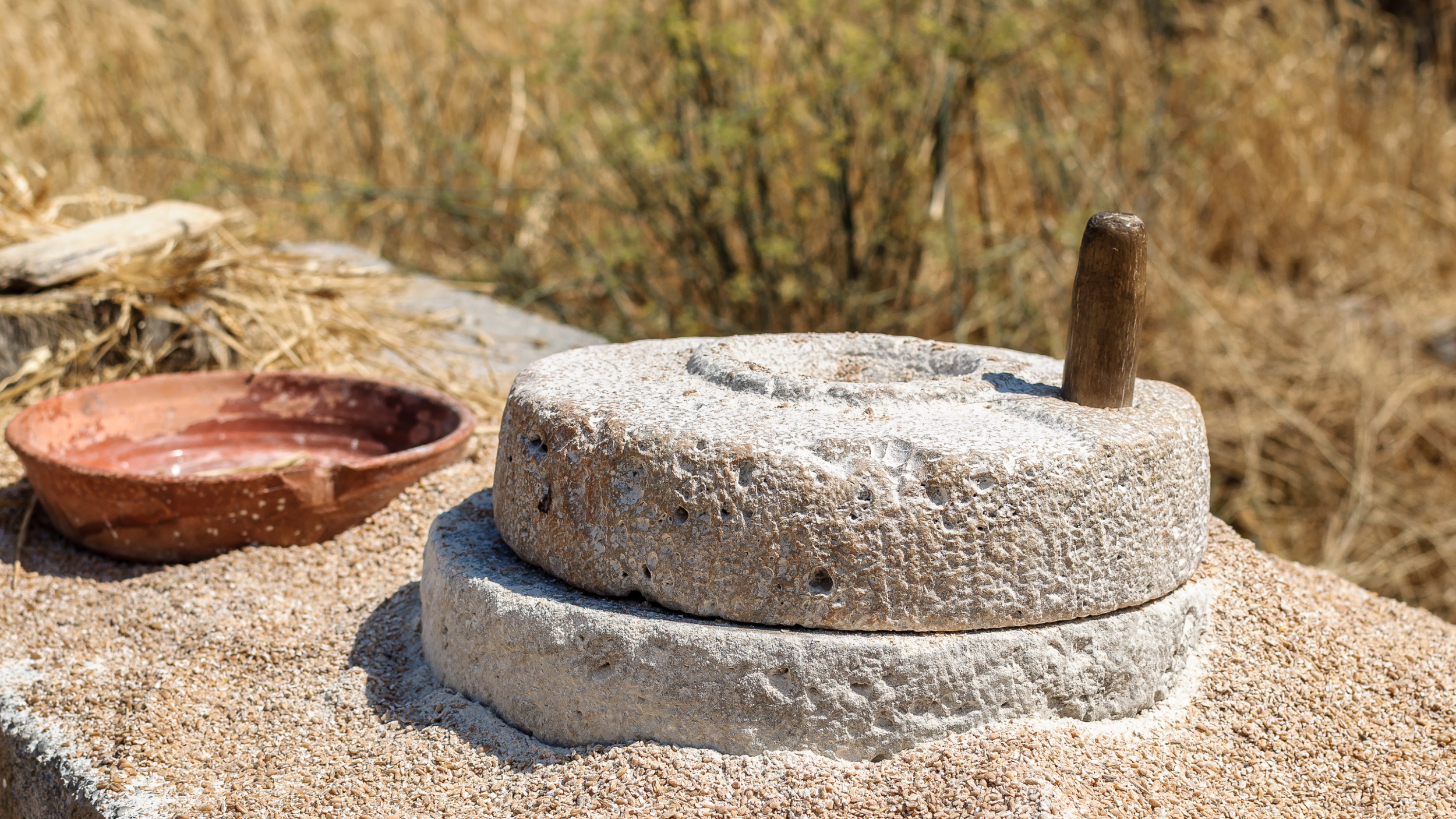
A hand operated stone grain mill
The Hopeful Future for Bread (& Pastry)... and Bringing Back the Stone (Milling) Age
Grocery Stores: slowly making their way into grocers are brands like Bread Alone. They work with regional mills and the grain identity matters to the brand. It’s at least a genuinely traceable supply chain. As of now, essentially no major commercial bread brand holds or sources from ROC-certified grain operations. The brands that come closest — Bread Alone, One Mighty Mill — are regional or mid-scale; and, brands like Jovial and Oatman Farms are grains and flour products. The gap between "organic" and "regeneratively grown" in the bread aisle is still very wide.
Artisan Bakers: not all artisan bread bakers have the same level of sourcing principles and everyone is somewhere along the spectrum. Some bakers use conventional flours but are naturally leavening them, often known as sourdough. Some bakers are using flours from Central Milling and King Arthur – better quality than the Gold Medals of the world – but farmer relationships might be opaque. Others are using more whole grain flours from regional millers like River Valley Grains (NJ), adding it in as 20-30% of their bread recipes. Others are sourcing 100% from their local and regional stone-millers, or milling flour themselves on their New American Stone Mills – paying respect to the farmer by keeping almost 100% of the original wheat berry. And a very few millers and bakers are making flour from grains grown organically and even regeneratively.
Only a handful across the country are producing a fundamentally different type of product - real bread, as defined by what we have known it as for centuries. If you tried to reconstruct bread as it was eaten across most of human history, you would land on something like: a whole grain or “high-extraction” (meaning high % of the weight of the wheat berry is still retained) flour, stone-milled, from a landrace or heritage variety, fermented with a wild culture for an extended period, baked in a wood-fired or hearth oven. The crumb would be denser than modern bread. The crust would be thick and hard. The flavor would be deeply complex — sour, nutty, slightly bitter, earthy. It would be genuinely filling in small quantities because the nutrients are actually available and the starch digests slowly. It would go stale predictably and dry out rather than mold quickly. In short, it’s a true representation of the crop from which it came.
Transformational mills like Brooklyn Granary & Mill (Brooklyn, NY), Farmer Ground (NY), River Valley Community Grains (NJ), Farmer Mai (CA), Camas Country Mill (OR), Cairnspring Mills (WA), Maine Grains (ME), Janie's Mill (IL), Hayden Flour Mills (AZ) just to name a few – are primarily focused on not only geographic preferences for their supply, but also whether the farmers are taking an agroecological approach to their farming practices, regenerating the land and the soil health all while producing food for us.
Pastry: let’s not even get started on the huge surge in demand for pastry. Imagine if all of that flour was stone-milled and regeneratively grown? Adding flavor, nutrition and even more beauty to our “Instagram-worthy” bites.
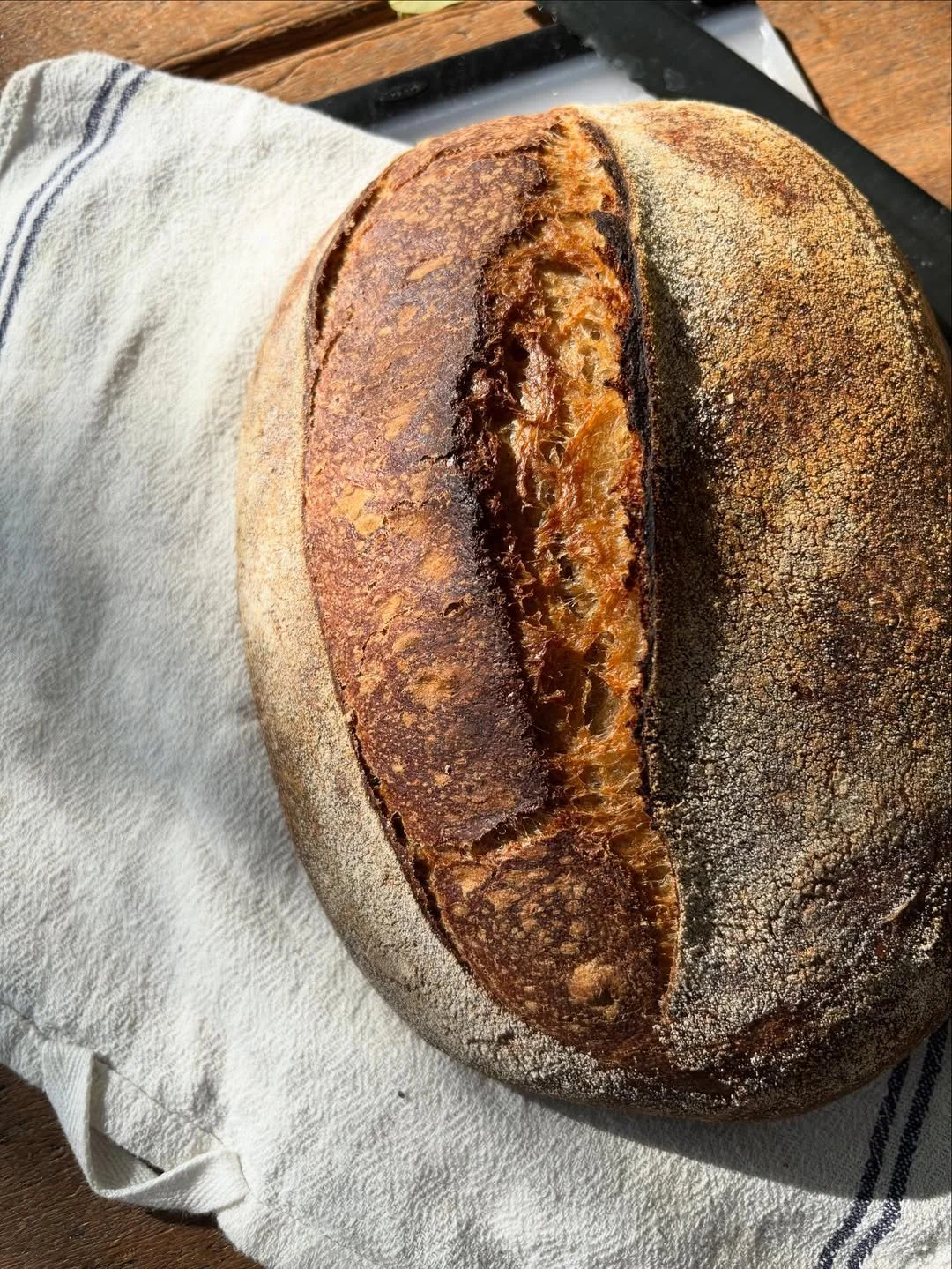
Graindead Bread loaf made with Glenn Spring, Renan and Einkorn
Why Regenerative Grain Farming Matters
The fundamental premise of regenerative grain farming is that it should build soil over time, rather than degrade it. Conventional farming today – particularly the corn/soy rotation that dominates the American Midwest — uses inputs (synthetic nitrogen, herbicides, fungicides) to compensate for declining soil biology, and the system is then held together by chemistry rather than biology and ecology. Regenerative farming tries to reverse that relationship, using the crop itself and the surrounding ecology as the primary tool for building soil health, with inputs reduced or eliminated as soil function improves. The health of the soil determines the health of everything that grows in it, and ultimately our own health – soil health is planetary health is human health.
The connection between soil health, grain quality, flour character, fermentation behavior, nutritional value, flavor and human wellbeing is real. What the best practitioners in regenerative grain farming and artisan milling are doing is trying to reconstruct the entire supply chain that industrial agriculture and industrial milling severed.
The Solution: Re-Regionalizing Grains is Fundamental to Food Systems Transformation
When we think about re-regionalizing our food system, this is why grains can be such a huge impactful lever for system change. The current system wasn't built by accident. It was built by a century of policy, infrastructure investment, and capital concentration that all pointed in the same direction: consolidation, commodification, and the erasure of regional differentiation.
The single biggest barrier to re-regionalization isn't farmer willingness or consumer demand — it's actually what people call the “missing middle” infrastructure. The 20th century systematically eliminated the processing layer that once connected regional farms to regional markets.
The solution: this where policy, capital and demand across the supply chain must work collaboratively. In grain specifically, this means:
Regional mills capable of handling diverse varieties and small lots from a variety farms
Grain cleaning and storage facilities that can keep varieties segregated (commodity elevators co-mingle everything)
Malting facilities for barley and other grains
Regional seed systems and variety trials
Distribution networks that can move identity-preserved grain from farm to baker to consumer
In New York State, there’s the Glynwood Center for Regional Food and Farming - whose Grains & Staples program is working to address the infrastructural change necessary to connect farmers to consumers.
Golden State Grains, funded by the California Wheat Commission, is the result of collaboration across members of the grain supply chain.
In Washington State, Cairnspring Mills is one of the largest millers working with regenerative farmers and bakeries across the West Coast - playing an integral role in their regional supply chain in partnership with the WSU Bread Lab. It’s worth noting Cairnspring Mills’ creative funding model for their latest multi-million dollar mill, a perfect example of the important role of thoughtful capital contributions.
In all, the end state isn’t pre-industrial farming, or a complete “return to the past”. Instead, it’s a bioregionally organized system, made possible by modern technology and communication systems. Something that is not scalable, but rather, replicable. Tailored to each regional supply chain and market. Myriad grain varieties that are climate resilient and high-yielding based on what actually grows there regionally. Celebrated by bakers and consumers who are looking for more flavorful and climate-friendly options. Where the largest caloric intake of our daily diet can actually be traced to the nutritional quality of what we’re consuming, where it’s being grown, by whom and how. Yes, it’s about your choice as a consumer. It’s also about demanding a better system and collaborating with others to breathe life into it.
